You may have seen red light therapy devices popping up on social media, marketed for skin care or muscle recovery. But the mental health applications of this technology are grounded in a body of research that goes back decades and is rapidly growing. The scientific term is photobiomodulation, and what it describes is surprisingly straightforward: specific wavelengths of light can change how your cells produce energy, and that change has measurable effects on your brain.
Photobiomodulation: Light That Talks to Mitochondria
Every cell in your body contains mitochondria, the structures responsible for producing adenosine triphosphate (ATP), which is cellular energy. Your brain, despite being only about 2% of your body weight, consumes roughly 20% of your total energy. When mitochondrial function is impaired, the brain feels it first: foggy thinking, low motivation, emotional reactivity, and difficulty recovering from stress.
Red light (around 660 nm) and near-infrared light (around 850 nm) are absorbed by an enzyme in the mitochondria called cytochrome c oxidase (CCO), which sits in Complex IV of the electron transport chain. When these wavelengths of light hit CCO, they enhance its activity, which increases ATP production, releases nitric oxide (a vasodilator that improves blood flow), and reduces reactive oxygen species (oxidative stress). This isn't theoretical. It's been measured in cell cultures, animal models, and human trials.
Why 660 nm and 850 nm together? Red light at 660 nm is absorbed near the surface, affecting skin and superficial tissues. Near-infrared light at 850 nm penetrates deeper, reaching muscles, joints, and when applied to the head, the outer layers of the brain. Using both wavelengths together creates what researchers call a layered treatment effect: surface-level and deep-tissue stimulation simultaneously. This is why most clinical devices use a dual-wavelength approach.
What the Research Shows
In a pilot study of 10 patients with major depression (9 of whom also had anxiety), researchers applied near-infrared light to the forehead for four minutes per session. Using the Hamilton Depression Rating Scale and the Hamilton Anxiety Rating Scale, they found significant improvements at both 2 weeks and 4 weeks after a single treatment session. Cerebral blood flow, measured by near-infrared spectroscopy, also increased during treatment.
Schiffer, F. et al. (2009). Psychological benefits 2 and 4 weeks after a single treatment with near infrared light to the forehead: a pilot study of 10 patients with major depression and anxiety. Behavioral and Brain Functions, 5(46). PMC2796659.
A 2023 systematic review and meta-analysis of randomized controlled trials concluded that photobiomodulation significantly improves depression symptoms compared to placebo. The review highlighted that targeting the prefrontal cortex with near-infrared wavelengths produced the most consistent antidepressant effects, with improvements in both self-reported symptoms and clinician-rated scales.
Zhang, Z. et al. (2023). Photobiomodulation improves depression symptoms: a systematic review and meta-analysis of randomized controlled trials. Frontiers in Psychiatry, 14:1267415.
A comprehensive narrative review published in the Journal of Clinical Medicine found that brain photobiomodulation enhances the metabolic capacity of neurons, stimulates anti-inflammatory responses, reduces neuronal apoptosis (cell death), promotes neurogenesis (growth of new neurons), and increases production of brain-derived neurotrophic factor (BDNF). Clinical trials reviewed included applications for traumatic brain injury, depression, and neurodegenerative disease.
Hamblin, M. R. (2018). Brain Photobiomodulation Therapy: A Narrative Review. Molecular Neurobiology. PMC6041198.
A 2024 review synthesized both animal and human research on photobiomodulation for depression. The authors identified multiple mechanisms of action including enhanced ATP production, increased CCO activity, improved emotional regulation through prefrontal cortex stimulation, enhanced hippocampal neurogenesis, and modulation of serotonin and nitric oxide levels. The review noted that PBM is affordable, has a strong safety profile, and is well-suited for at-home use.
Li, Y. et al. (2024). Photobiomodulation: shining a light on depression. Theranostics, 15(1):362-386. PMC11671386.
How Red Light Therapy Supports Mental Health
The effects of photobiomodulation on the brain operate through several interconnected pathways, and understanding them helps explain why shining a light on your head isn't as strange as it sounds.
Mitochondrial Energy & Brain Function
Depression and anxiety are increasingly understood as disorders of brain energy metabolism. When neurons can't produce enough ATP, they communicate less effectively, and the prefrontal cortex (responsible for emotional regulation, decision-making, and executive function) is particularly vulnerable. By boosting ATP production through cytochrome c oxidase stimulation, red and near-infrared light help restore the energy supply that these brain regions need to function well.
Neuroinflammation Reduction
Chronic inflammation in the brain is one of the most well-documented biological features of depression. Elevated levels of pro-inflammatory cytokines like TNF-α, IL-1β, and IL-6 are consistently found in people with major depressive disorder. Photobiomodulation has been shown to suppress these inflammatory markers, both through direct cellular effects and through activation of the vagus nerve's anti-inflammatory pathway.
The Vagus Nerve Connection
Here's where light therapy connects to something we've written about before. When red and near-infrared light penetrate tissue, the increased nitric oxide release and improved cellular signaling can stimulate vagal activity. A 2024 study published in Neurosurgery demonstrated that light-mediated activation of vagal fibers reduces inflammatory cytokine production, providing direct evidence for a light-to-vagus-nerve-to-anti-inflammation pathway. This means red light therapy may support the same parasympathetic calming system that cold facial therapy activates, but through a different entry point.
Sleep & Circadian Rhythm Support
A 2023 study published in Frontiers in Psychiatry found that red light exposure improved sleep quality in both healthy subjects and individuals with insomnia. Unlike blue light (which suppresses melatonin), red and near-infrared wavelengths do not disrupt circadian rhythm and may actually support it by enhancing mitochondrial function in the suprachiasmatic nucleus, the brain's master clock. Better sleep is one of the strongest predictors of improved mental health outcomes.
You don't need an expensive device to get sunlight. Let's be clear: the most well-studied form of light therapy for depression is still plain morning sunlight or a bright light box (10,000 lux white light for 20–30 minutes). Red light therapy works through a different mechanism (photobiomodulation rather than circadian entrainment), and the two practices complement each other. If you're looking for a starting point, getting outside in the morning is free and well-supported. The products below are for people who want to explore the specific red/near-infrared wavelengths that the photobiomodulation research focuses on.
Safety Considerations
Red light therapy has a strong safety profile in the research literature, but some precautions apply:
- Do not look directly into the LEDs. Most devices recommend closing your eyes or wearing provided eye protection during use.
- If you have a history of seizures or photosensitivity, consult your doctor before using transcranial red light devices.
- If you are taking photosensitizing medications (certain antibiotics, retinoids, or chemotherapy drugs), talk to your healthcare provider first.
- Sessions are typically 10–20 minutes. More is not necessarily better; the research suggests there is a therapeutic window, and overexposure may reduce benefits.
Red light therapy is not a substitute for professional mental health treatment. It is best understood as a potential complement to therapy, medication, and lifestyle practices like exercise and sleep hygiene.
How to Practice Red Light Therapy
For mental health applications, the research focuses on transcranial photobiomodulation, meaning light applied to the head (forehead and temples) to reach the prefrontal cortex. Most study protocols use sessions of 10 to 20 minutes, two to three times per week, with devices that emit both red (660 nm) and near-infrared (850 nm) wavelengths.
Position the device 6 to 12 inches from your forehead (or per the manufacturer's instructions), close your eyes, and sit comfortably. Many people pair the session with meditation, breathwork, or simply quiet rest. Some users also apply the light to the neck area, where the vagus nerve runs close to the surface.



If You Want to Try It at Home
Morning sunlight is still the gold standard for mood. But if you want to explore the specific wavelengths used in photobiomodulation research, here are two options at different price points.
Viconor Red Light Therapy Lamp (660nm + 850nm)
A 120-LED panel with both 660 nm red and 850 nm near-infrared wavelengths, mounted on an adjustable stand. Curved surface design focuses the light for better coverage. Can be used for face, neck, and body. Works right out of the box.
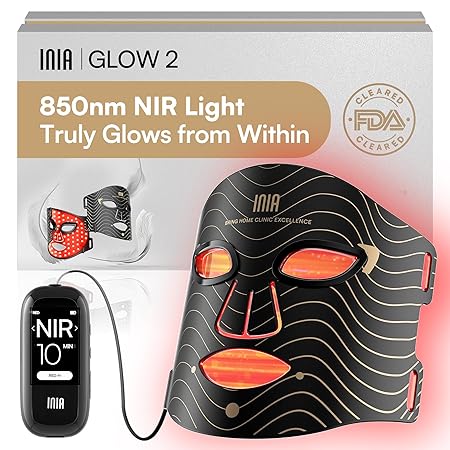
INIA Red Light Therapy Mask (4 Modes + NIR)
A wearable LED face mask with 4 light modes: red (620 nm), red (630 nm), blue (460–470 nm), and red+blue, each with optional 850 nm near-infrared activation. Rechargeable (2600 mAh battery), hands-free, and covers the full face including forehead and cheek areas closest to the prefrontal cortex.
Full transparency: these are affiliate links. If you buy through them, we get a tiny commission at no extra cost to you—and we'd genuinely appreciate it. But we only share products that connect back to the research in this article. Morning sunlight is free and well-studied, and it's a great place to start.
References
- Schiffer, F. et al. (2009). Psychological benefits 2 and 4 weeks after a single treatment with near infrared light to the forehead: a pilot study of 10 patients with major depression and anxiety. Behavioral and Brain Functions, 5(46). PMC2796659
- Zhang, Z. et al. (2023). Photobiomodulation improves depression symptoms: a systematic review and meta-analysis of randomized controlled trials. Frontiers in Psychiatry, 14:1267415. Frontiers
- Hamblin, M. R. (2018). Brain Photobiomodulation Therapy: A Narrative Review. Molecular Neurobiology. PMC6041198
- Li, Y. et al. (2024). Photobiomodulation: shining a light on depression. Theranostics, 15(1):362-386. PMC11671386
- Zhao, J. et al. (2019). Red light and the sleep quality and endurance performance of Chinese female basketball players. Journal of Athletic Training. (Referenced via Frontiers in Psychiatry review on red light and sleep.)
- Maiello, M. et al. (2019). Transcranial photobiomodulation with near-infrared light for generalized anxiety disorder: A pilot study. Photobiomodulation, Photomedicine, and Laser Surgery.
- Light-mediated vagus nerve stimulation inhibits splenic inflammatory cytokine production (2024). Neurosurgery, 91(Supplement 1). LWW